Business process improvement

We redesign processes affected by delays, repeated work, or errors. We work with the team to change task sequences, adapt its tools, and check how the revised operation performs.

On this page

Follow work from beginning to end

A process can meet its objective while requiring repeated data entry, queries between departments, or corrections that consume capacity. We follow work from the request through to its outcome to understand where effort accumulates and what people need to carry it out. This review establishes which steps should change and which serve a function that needs to be retained.

Llull designs changes with those performing and receiving the work. An improvement may involve clarifying a criterion, changing a sequence, or connecting systems to reuse information. We examine each proposal’s effect on the whole process, including exceptions that need a decision and the responsibilities of the departments involved.

Implementation brings the agreed procedures and tools together in a trial using representative work. Participants can identify difficulties the initial design did not anticipate and check whether the change helps them carry out their task. That experience allows the proposal to be adjusted before it is extended to the rest of the operation.

Follow-up compares results with an initial baseline and retains the context of the trial. A change in lead times may relate to workload, an adoption difficulty, or process design. We agree with the owner on how to interpret those differences and maintain procedures and tools as needs change.
What we aim to improve

Less repeated work

Redesign can remove unnecessary entry, review, or handoff steps. Its effect is examined through handling time, corrections, and process workload.

Changes the team can maintain

Procedures and responsibilities are established during the trial. Follow-up helps identify whether difficulties recur or change as workload increases.

The changes included in the engagement

Process assessment

We identify inputs, steps, responsibilities, and outcomes. We review where work accumulates or corrections recur and agree on measures for observing improvement.

Design and tools

We propose a work sequence and adapt forms, procedures, or automations. Each change is connected to the problem it addresses and the people who will use it.

Trial and follow-up

We support a process trial, examine exceptions, and document adjustments. We agree with the process owner on how to maintain procedures and review results.

Ownership of ongoing improvement

Participation in the engagement

Participants include those performing and receiving the work, together with a process owner. The company agrees on room to trial changes and provides the records needed for comparison.

Handover and continuity

We hand over the included procedures and tools, trial results, and follow-up instructions. Knowledge transfer enables the owners to explain the new sequence, handle exceptions, and maintain the tools. Outstanding opportunities remain connected to experience of using the process to inform subsequent improvements.

A process we can review with you

Illustrative scenario

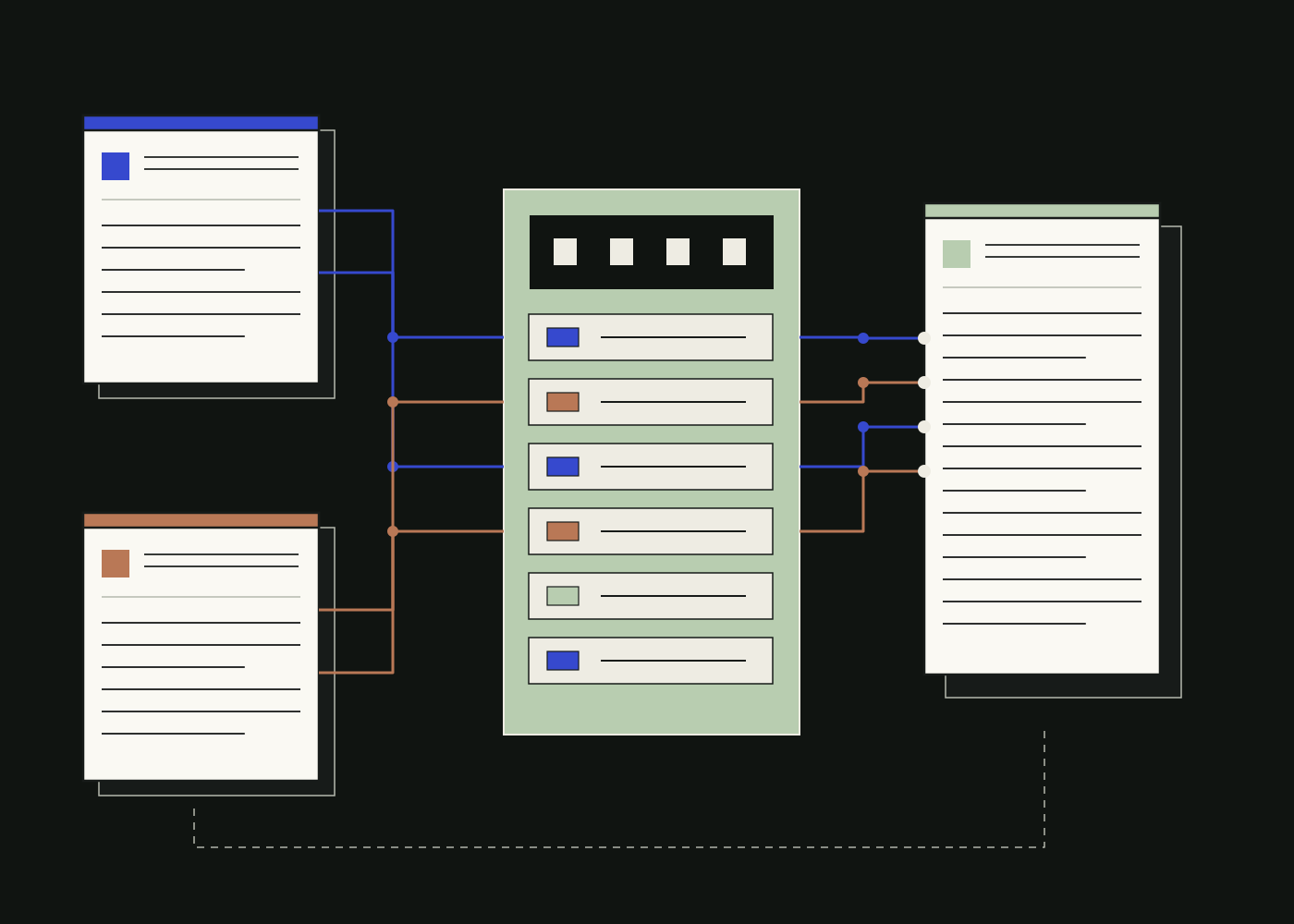
Integrated sales, inventory, and invoicing

A company selling through several channels can bring orders, inventory, payments, and invoices into a single process. Integration allows the team to review each sale’s status and address discrepancies within its working tools.